


A primary benefit of FX algos when they were first introduced was the access they provided for clients to external markets, allowing them to post their interest across different venues to source liquidity and trade passively or aggressively across these different platforms. In response, banks typically adopted a hybrid approach, according to Razaq. “If the bank’s franchise liquidity was showing the best price, then the algo would trade internally with the bank, but if the market was cheaper, then the algo could look externally beyond the bank to source the liquidity,” he adds. “What we are now observing is that the market is becoming far more ‘electronically sensitive’, which means that these algo orders are now starting to leave digital signals, creating information leakage of a client order. The minute we post an order onto an exchange and that order is transmitted through the market data we are finding that some sophisticated counterparts are reacting to the event.”
While information leakage was initially attributed to HFTs, Razaq notes that there has also been a notable increase in regional banks looking at the market data before formalising where they
think their price should be when they’re going to market make. “As a result, when they see a change in the order book, they will change their quote to reflect where they believe the market is trading,” he says. “That quote then gets transmitted back to these exchanges and the market shifts as a result. We call this phenomenon indirect market impact, or information leakage.” Now passive algo orders are now likely to create this indirect market impact as a result, Razaq warns, which in turn means the algo creates more noise and the performance deteriorates.
“To solve this problem, we conducted A/B testing on posting orders which are fully visible to the market, versus posting orders only on dark venues. What we saw from this was that there was a big performance improvement by not posting orders to the market,” says Razaq. “In response, we shared these findings with our exchange partners and liquidity providers and explained that we will now need to stop posting lit orders to their venues because it is having an impact on our client orders.”
In collaboration with these vendors, BNP now utilise a new dark order type. According to Razaq, this new order type allows the bank to post algo orders to these venues as before, but this time the details of that order book are not transmitted to all counterparts, so no one in the market is aware of the order. “This means that the order still gets filled passively, but it is now no longer creating this indirect market impact,” he says.
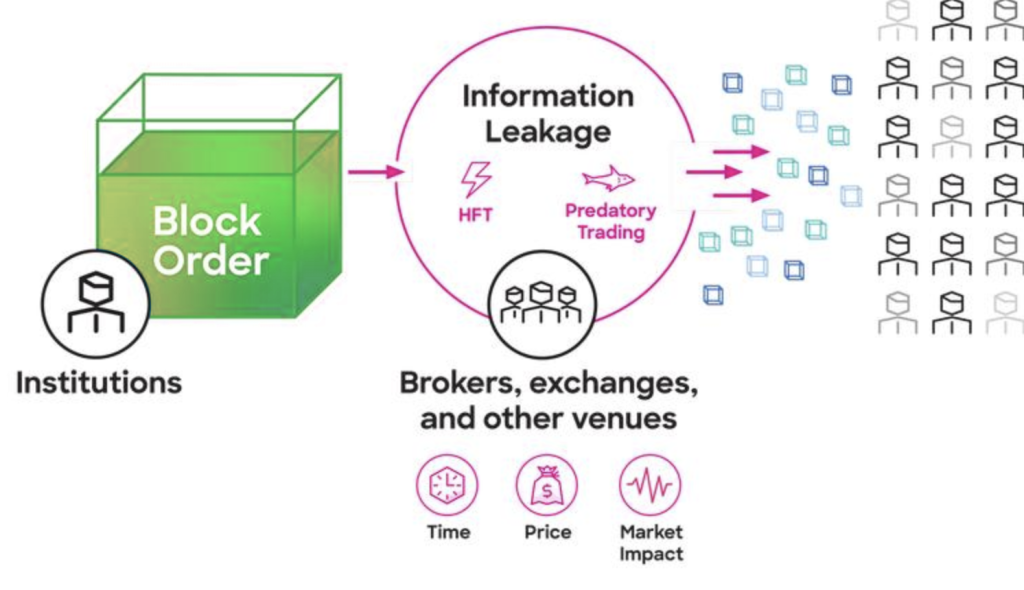
RISE OF MID-MATCHING
“This phenomenon has become a bigger issue and clients are also aware of it,” adds Razaq. “We have explained to clients this change in our posting logic, where we no longer post in lit venues, or if we do, it is in only on a highly sporadic, randomised basis, so it doesn’t create a consistent signal.
Our order placement philosophy has now shifted to placing the majority of our orders on dark platforms. After this shift, we ran a performance check and confirmed that it did indeed improve the performance of our algo orders.”
There is, however, a downside, Razaq explains. As the order is no longer being seen by the market, in turn this means that the fill ratios or fill speeds have significantly reduced. “Our next issue was that we then had to find a way to circumvent and fill that void, which is why we have since introduced more mid-matching capability into our platform,” he adds. “We have seen the arrival of more mid-matching venues in recent years, to the point where we can now increase our participation in mid-matching venues for our algo orders.”
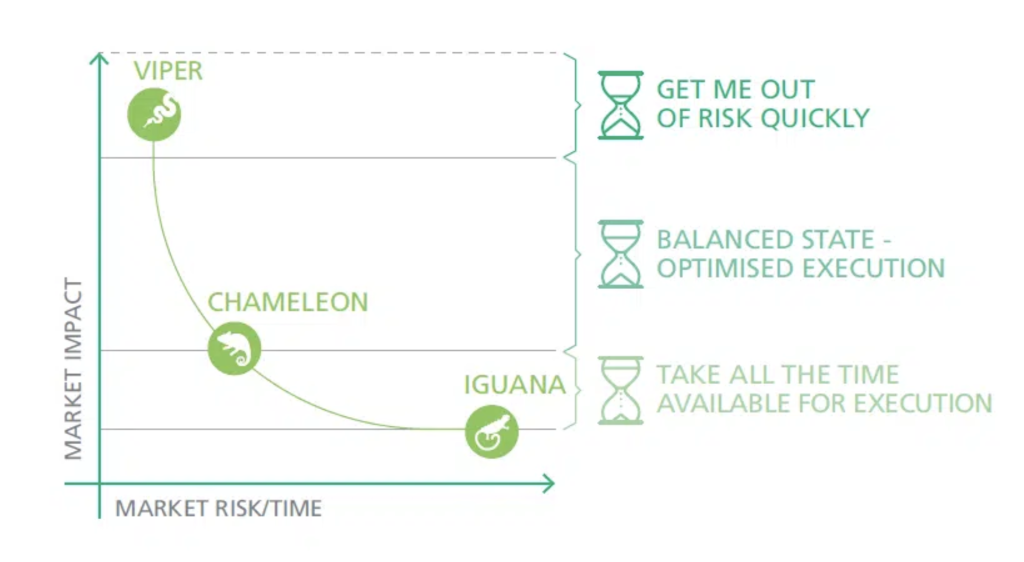
This is guided by finding the right balance of exposure between market risk and market impact
INTERNALISATION AND INNOVATION
On top of that, BNP also runs its own mid-matching platform, BNP Internal eXchange (BIX), which allows BNP clients to match orders off internally in a block match. Razaq explains that this cultivates a large block fill with zero market impact guaranteed on that trade, because that trade takes place internally on BNP’s platform. BIX was also recently expanded to not only accept client-to-client orders, but now any user (external and internal) using the algo platform can be part of that match. “The universe of BIX matching is starting to grow immensely. To aid that growth, we looked at innovative ideas on how to increase BNP’s market share. The more volume that trades through BNP’s algo platform, the more mid-matching fills we can offer.” This resulted in the launch last year of BNP’s gold label initiative, where the bank started allowing selected partner banks the ability to offer BNP algos to their client base. “All these new clients, will now utilise our algo platform, which in turn gives them access to BIX as well. By enriching the volumes that trade via BIX, we are also able to establish a new source of liquidity which cancels out the impact of not placing lit passive orders in the market anymore,” Razaq adds.
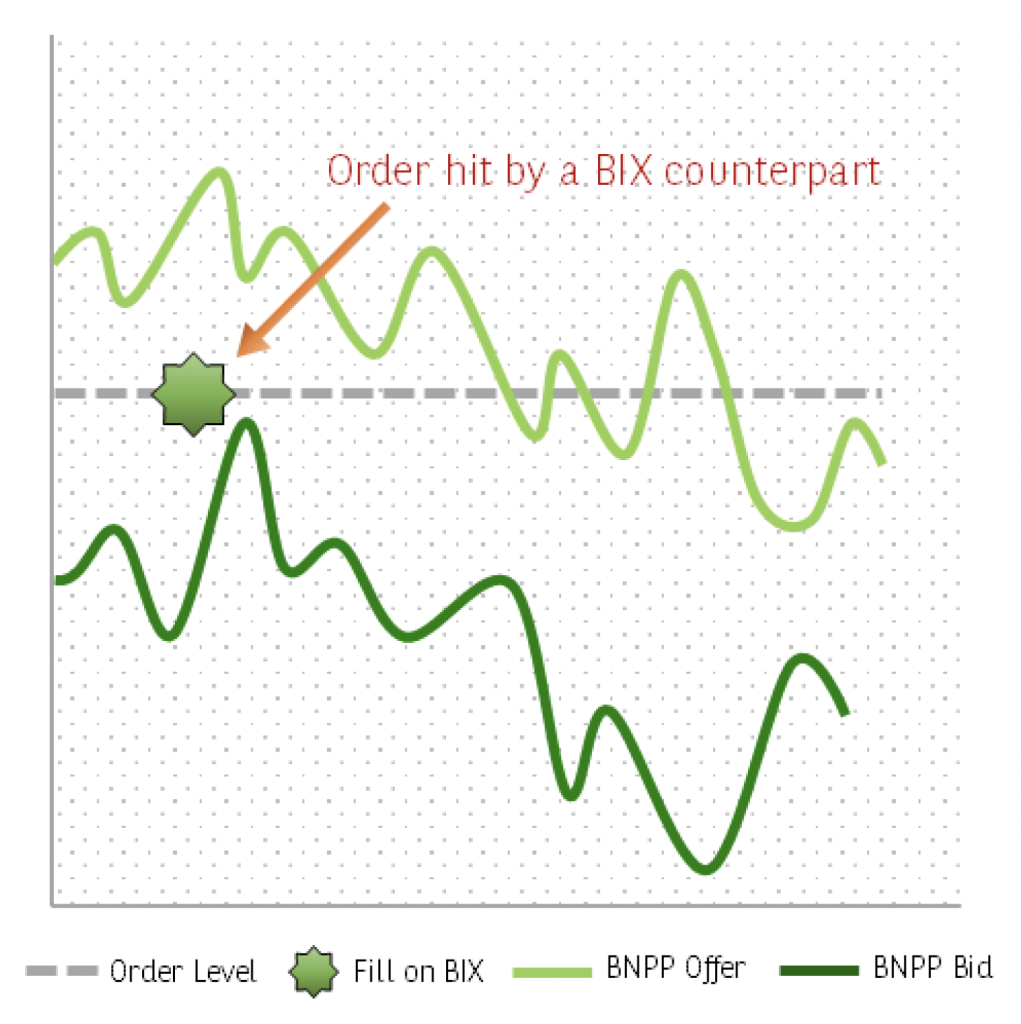
providing fills without exposing the order to the wider market
In addition to this, BNP has also introduced a new initiative, the BIX Peg product. Razaq explains that this tooling essentially introduces a partnership scheme with the bank’s market making desk.
“Through an electronic connection, we can now post a small component of the algo client’s order interest to BNP’s market making franchise, which provides client access to a unique pool of liquidity,” he explains.
This phenomenon has been evolving over the past few years but the impact was especially notable in the recent periods of heightened market volatility, explains Razaq, who adds that this accelerated the need to start migrating how BNP placed algo orders in the market. “We were also developing the BIX Peg tooling which now forms the foundation of our algo platform,” he says. “We have re-engineered our algos to move away from placing lit orders, which was the core of how algos used to source liquidity. BNP is a leader in the FX algo space and we responded to this shift in clients being more selective about internalisation rates and how we manage information leakage. Clients, especially more sophisticated clients, are becoming aware of these issues and are now starting to critique and pick the banks that can offer this advanced level of algo solutions execution.”
