The FX market is undergoing rapid, transformational change. A number of factors are driving this change, including regulatory developments, fiduciary responsibilities, increased focus on performance and cost and a general demand for improved transparency. This confluence of factors is resulting in an increasingly complex marketplace for participants to navigate
The global foreign exchange may be the world’s most liquid market, with more than $5 trillion traded daily, but that liquidity is not always so abundant when it comes to emerging markets. Can execution algorithms help the buy-side manage uneven and sometimes chaotic market conditions?
Quant Hedge has developed a method for short and medium-term FX and Futures trading that is based on what the systematic firm calls ‘aggregated alpha’. It’s an uncommon approach that also seeks to capitalise on a back-testing model that is the complete opposite of what many firms use. Adam Cox of FXAlgoNews catches up with Quant Hedge’s Managing Director, Victor Lebreton, to discover more about the process.
To an algorithmic trader, Bitcoin is just another foreign currency. It is freely convertible to most major currencies, it can be traded 24×7, and it can even pay interest. Furthermore, one can ask for historical data for backtesting, including level 2 quotes, from most of the exchanges. These exchanges offer application programming interfaces (API) to algorithmic traders for connection to their own automated trading programs. So the only question left is: what sort of systematic strategies can work on Bitcoin
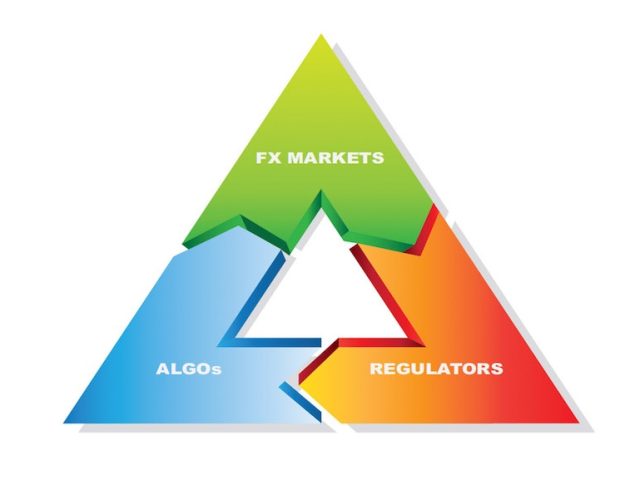
After a period of extensive media attention on the traditionally opaque and free-wheeling foreign exchange industry, FXAlgoNews explores how the regulatory landscape could affect the trend of algo adoption by the buy-side.
Adam Cox catches up with the Zurich-based fund manager Philippe Bonnefoy, who the mid-2000s, started a venture using algorithms to seize short-term FX opportunities, a trading technique he has been honing ever since and which is central to the success of his firm Eleuthera Capital AG.
If you’re new to FX algorithmic trading, one of the first technological challenges you will face is connectivity. And it is not a trivial one. Despite what you might think, optimising connectivity is not something to be left only to high frequency trading firms, as in our current times, bad latency means money left on the table for each trade you make. You may already have a solid background in equities algorithmic trading, and you might consequently treat this question as a “déjà vu”, but this would be a mistake.
Firms on both the buy-side and sell-side which trade forex systematically or execute discretionary orders algorithmically, require historical market data for strategy development, optimization, back-testing and simulation.
FX algo take-up is going strong as adopters get comfortable taking on market risk, resulting in a shake-up of the traditional order. Anna Reitman reports.
Dr Alex Krishtop, tells us more about The Certified Algorithmic Trader® (CAT®) program.
He can be reached at doctor@atassn.com