Among the most interesting findings from the recent BIS report into FX execution algorithms and market functioning was that it was able to take stock of the performance of algos during the market volatility seen in March.
After five years of relatively flat growth, FX algo adoption is officially on the rise.
Algo adoption rates may have slowed recently but they continue to grow among the buy-side. Nicholas Pratt examines the reasons for the take-up and what may help to further increase buy-side algo use in the future.
How well did FX algos perform in these choppy markets and are client perceptions of algo use now changed forever? Nicola Tavendale investigates.
Getting the buyside on board with FX algo strategies
If liquidity is the lifeblood of FX, then the fact that liquidity concerns have overtaken best execution requirements as the biggest daily challenge facing institutional traders will have come as some concern to many in these markets.
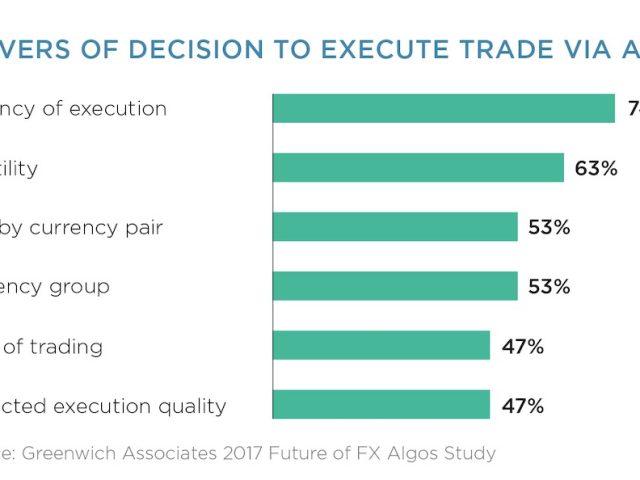
The past three years have seen numerous predictions of the rise in FX algo usage, but 2019 looks set to be the year that this traction becomes significant. For example, Refinitiv has reported that FX algo trading as a percentage of FX spot volumes is now at 20 percent, while larger buy side firms such Vanguard currently rely on algos to handle over half of their FX spot deals. Yet what are the factors driving this growth across the various client segments, instruments and regions? And as the evolution of the FX market gathers momentum, what are the leading providers doing to meet the increased demand? Nicola Tavendale investigates.
Buy-side use of algorithms in the FX market might be in its infancy, but it’s growing up fast.
The earliest algos delivered enhanced execution from a black box with minimal transparency, but buy-side firms now want to know more about how the strategies work, driving banks to lift the veil and provide greater insight, flexibility and customisation. Joel Clark reports.
For a crypto-investor looking to enter or exit a bitcoin position, the default is for them to log onto an exchange and manually execute their order.